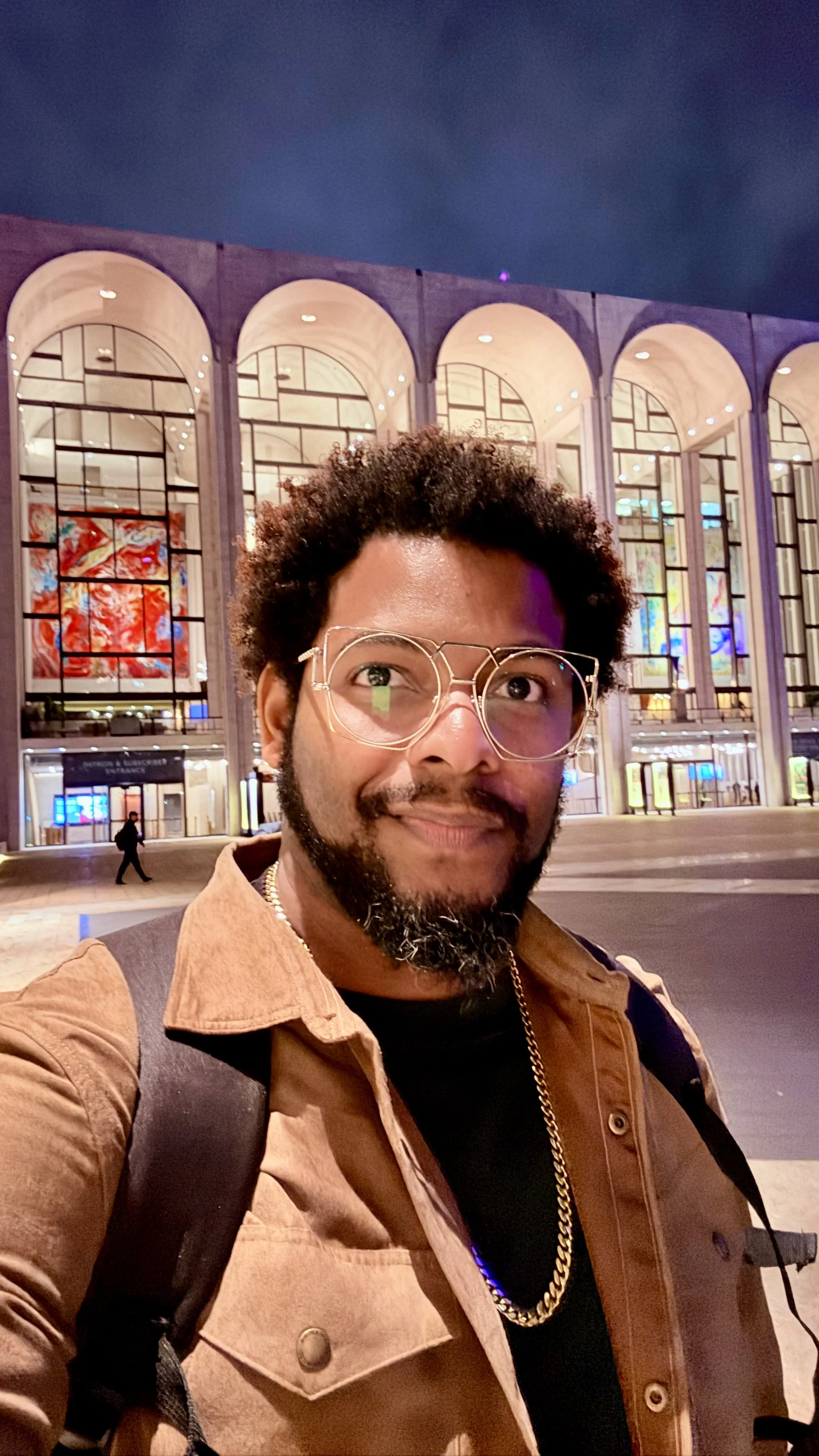
Relativity of Being: Exploring the Connection Between Physical Reality and Human Perception
"The Relativity of Being" is a pop-up art show and exhibit concept, created by brothers Dr. Ronald Gamble, Jr and Sketch Gamble, exploring the boundary where relativity and the concepts of quantum physics meets human perception. Drawing from the combination of theoretical physics and artistic abstraction, the show invites observers to entangle how the deepest concepts of the universe shape memory, words, emotion, and connection. The collection of works explores how human perception entangles with physical reality.
see and explore more artwork from the show at the links below
At the heart of the show is a question that has haunted physicists and artists alike: is reality fixed, or does it bend to the observer? Across our universe, time is not absolute; it stretches and contracts depending on how you perceive gravity. In the quantum world, particles exist in states of possibility until they are measured. "The Relativity of Being" takes these ideas out of the equations and onto the canvas, translating the strange and exotic conceptions of the cosmos into something experienced.
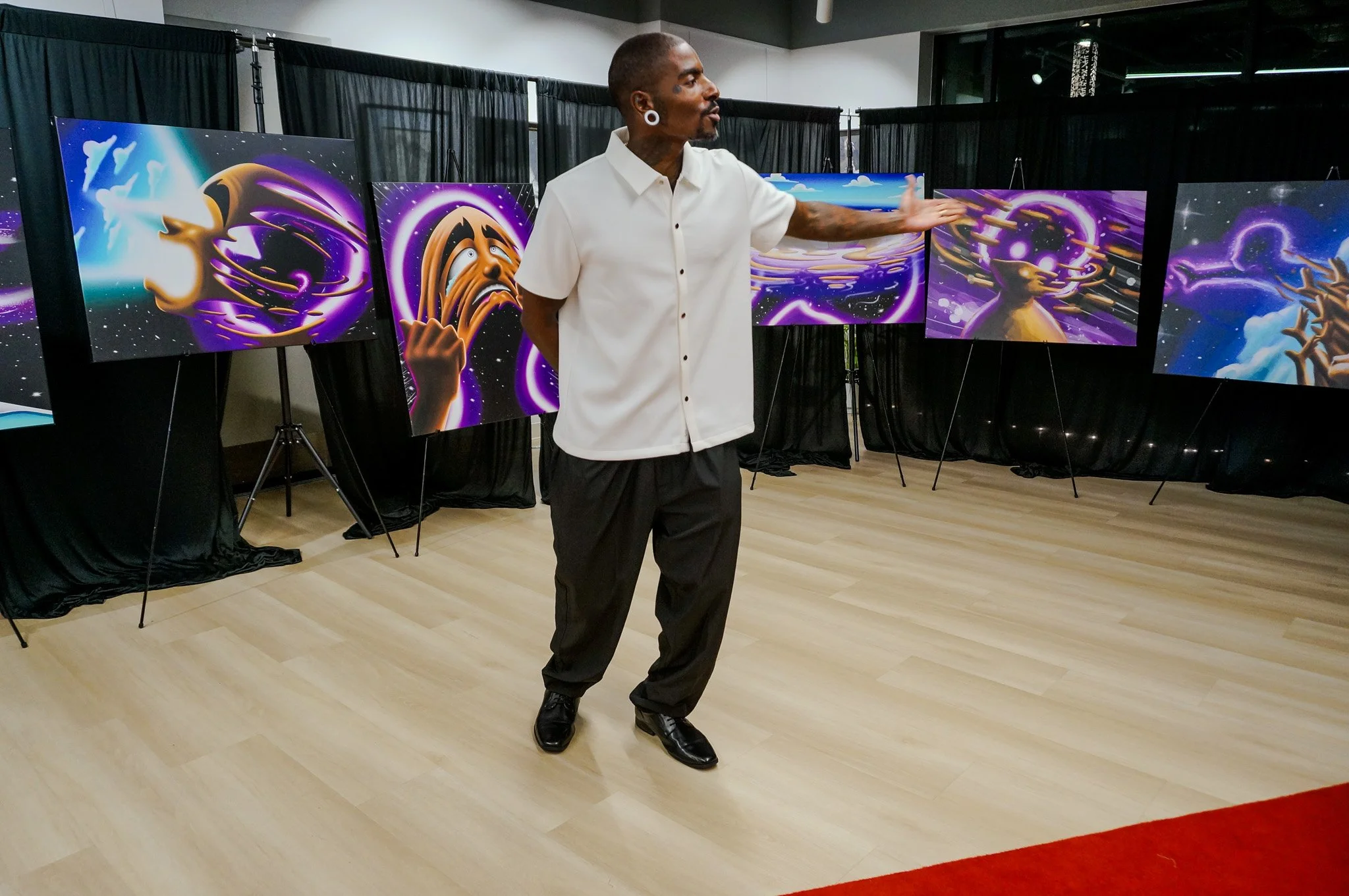
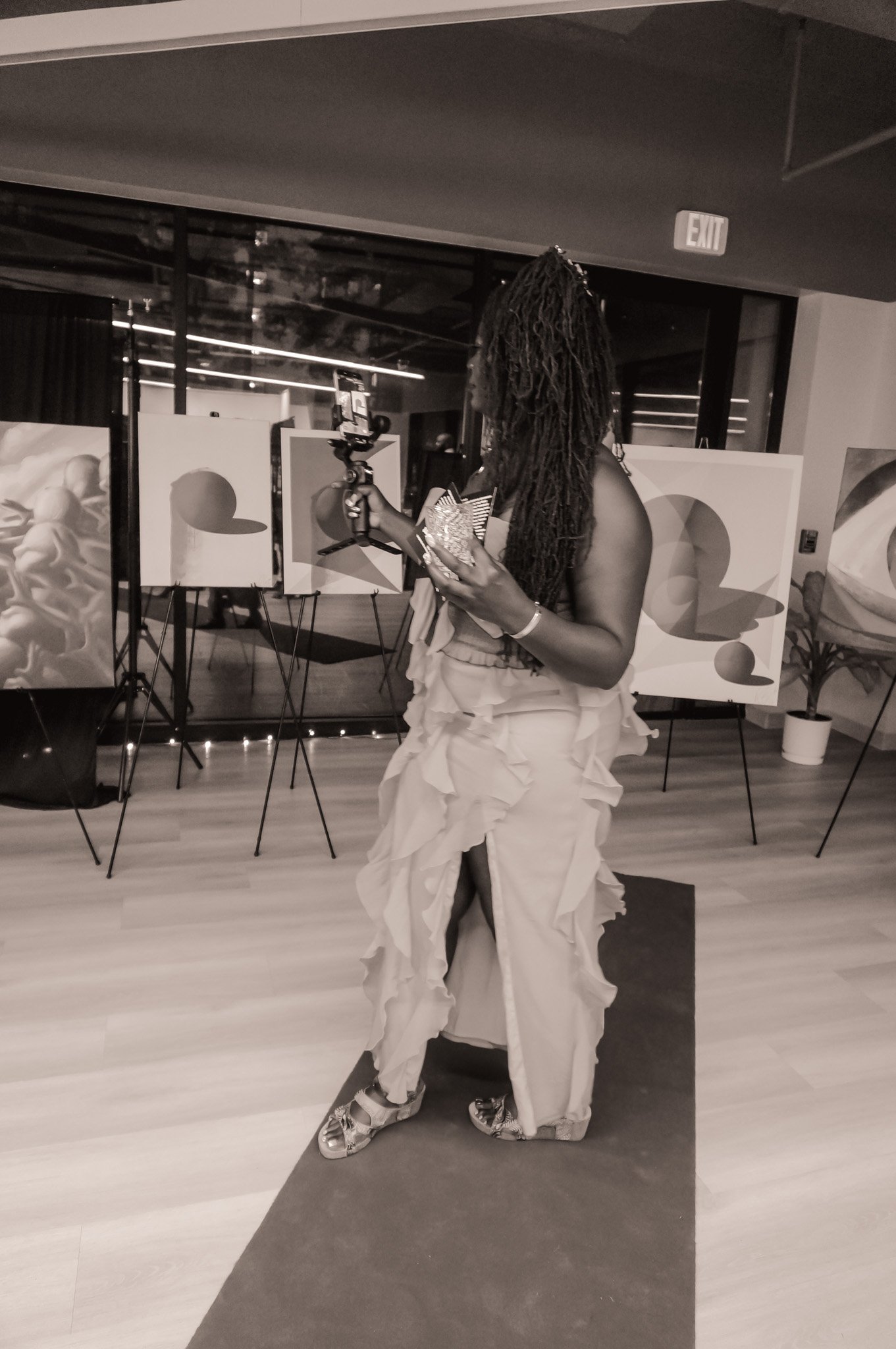
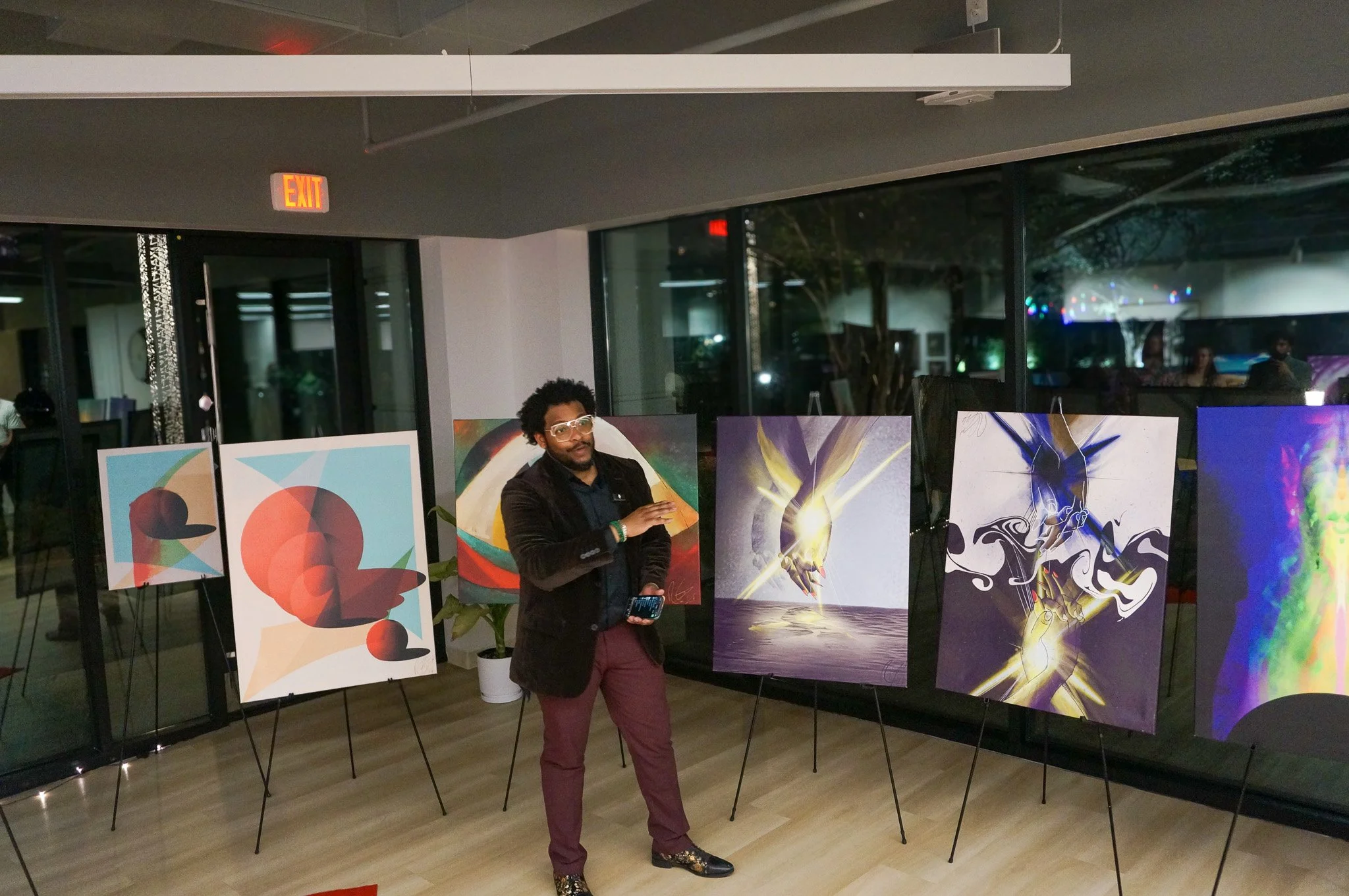
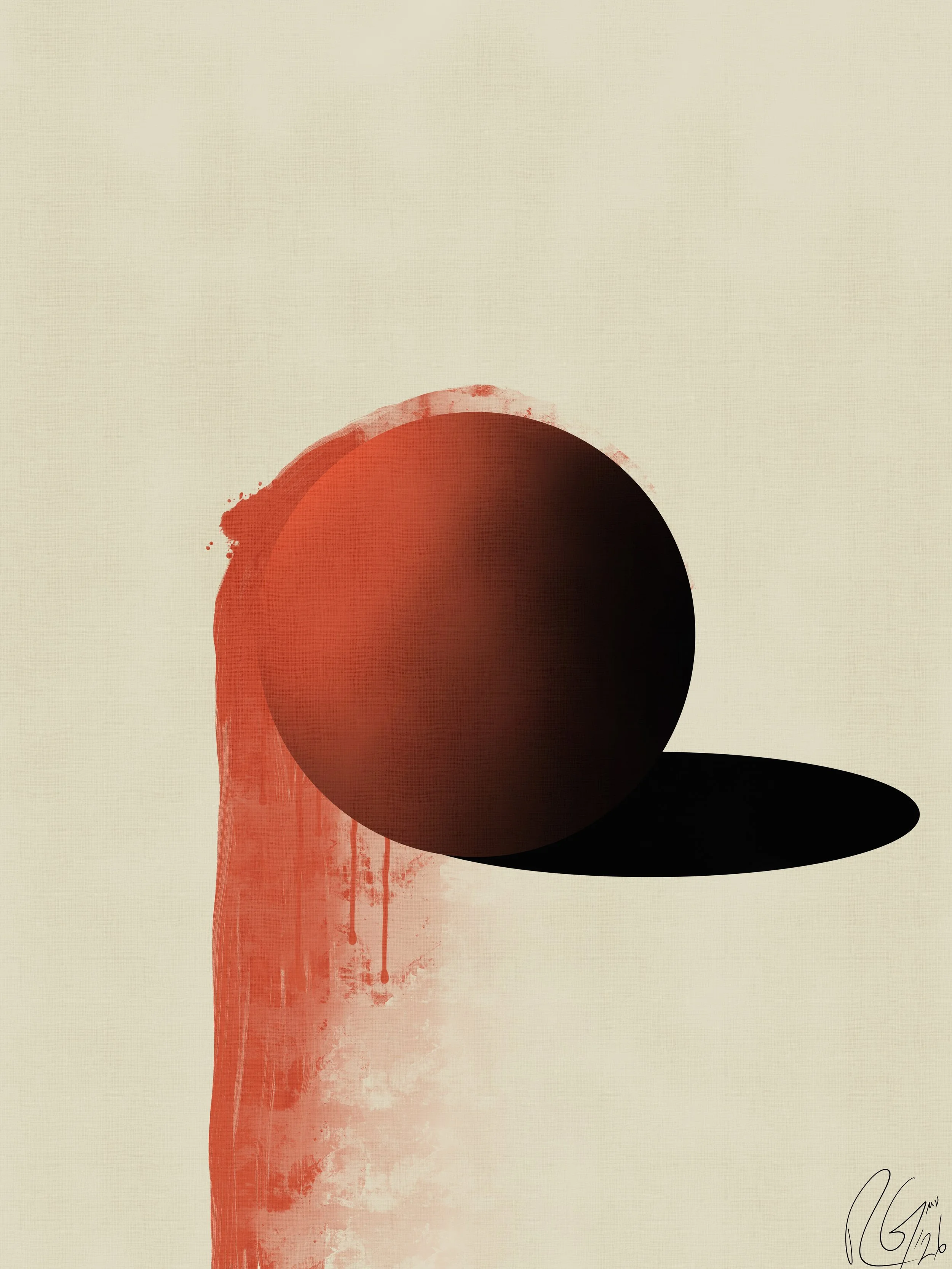
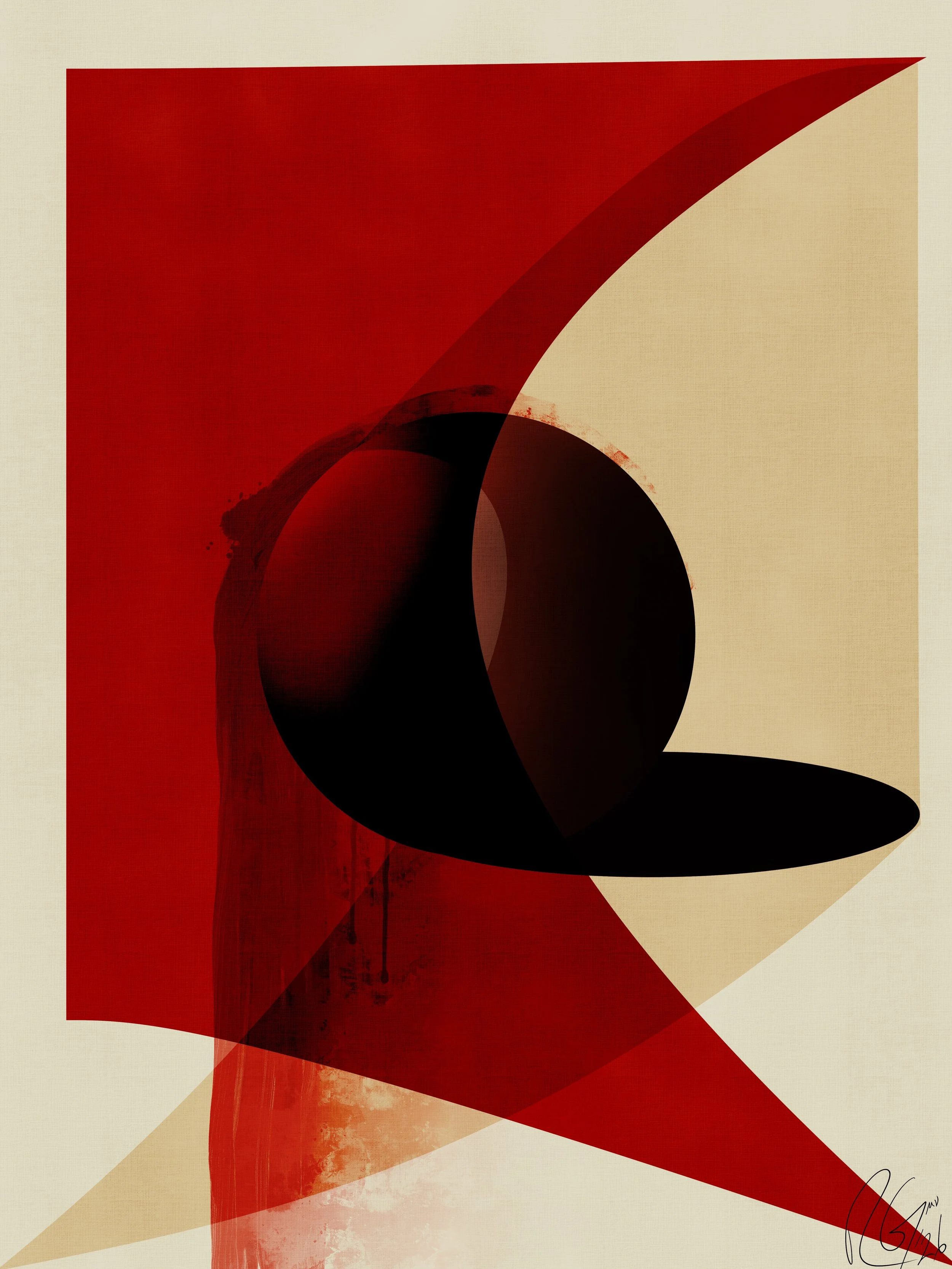
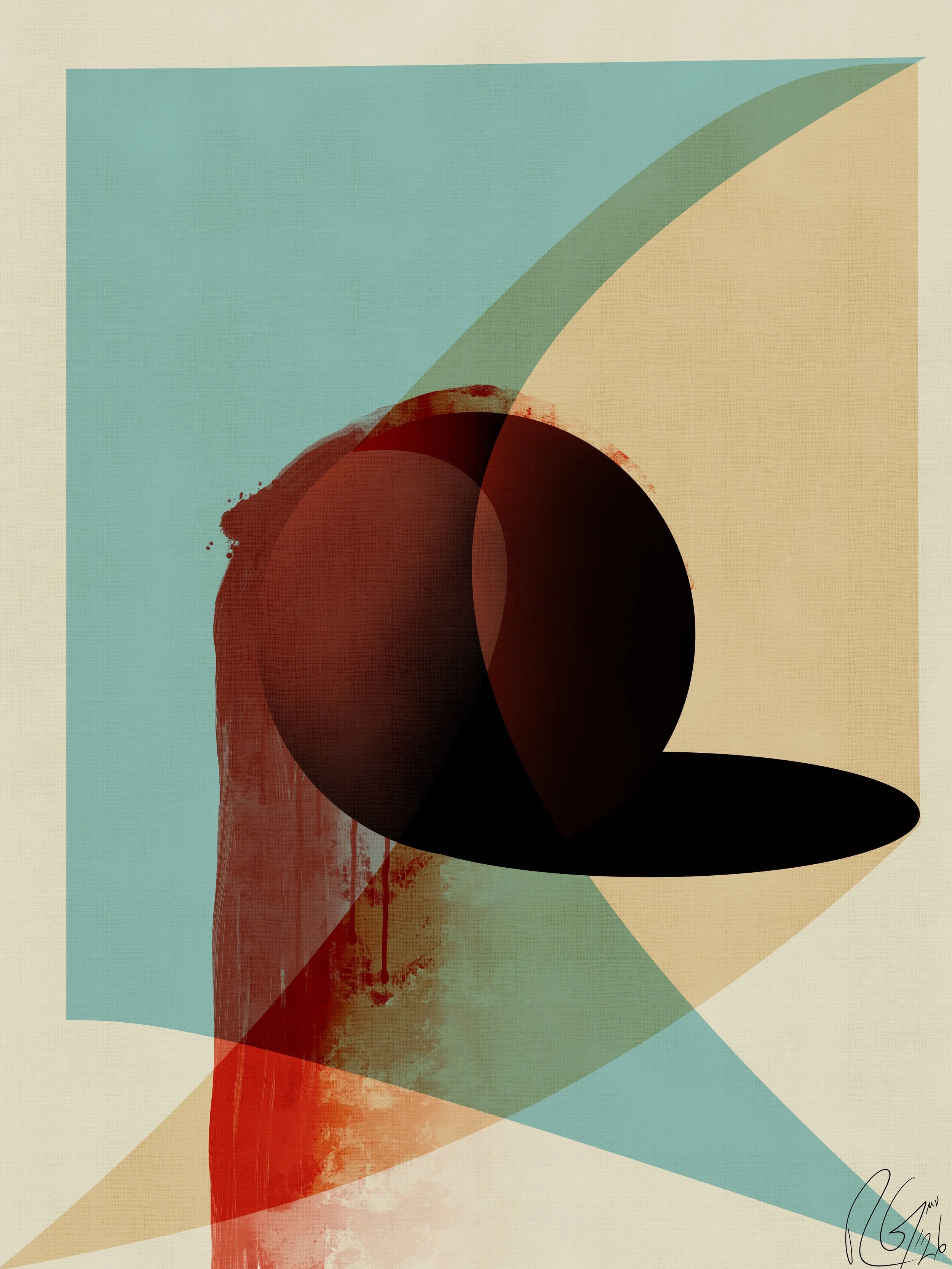
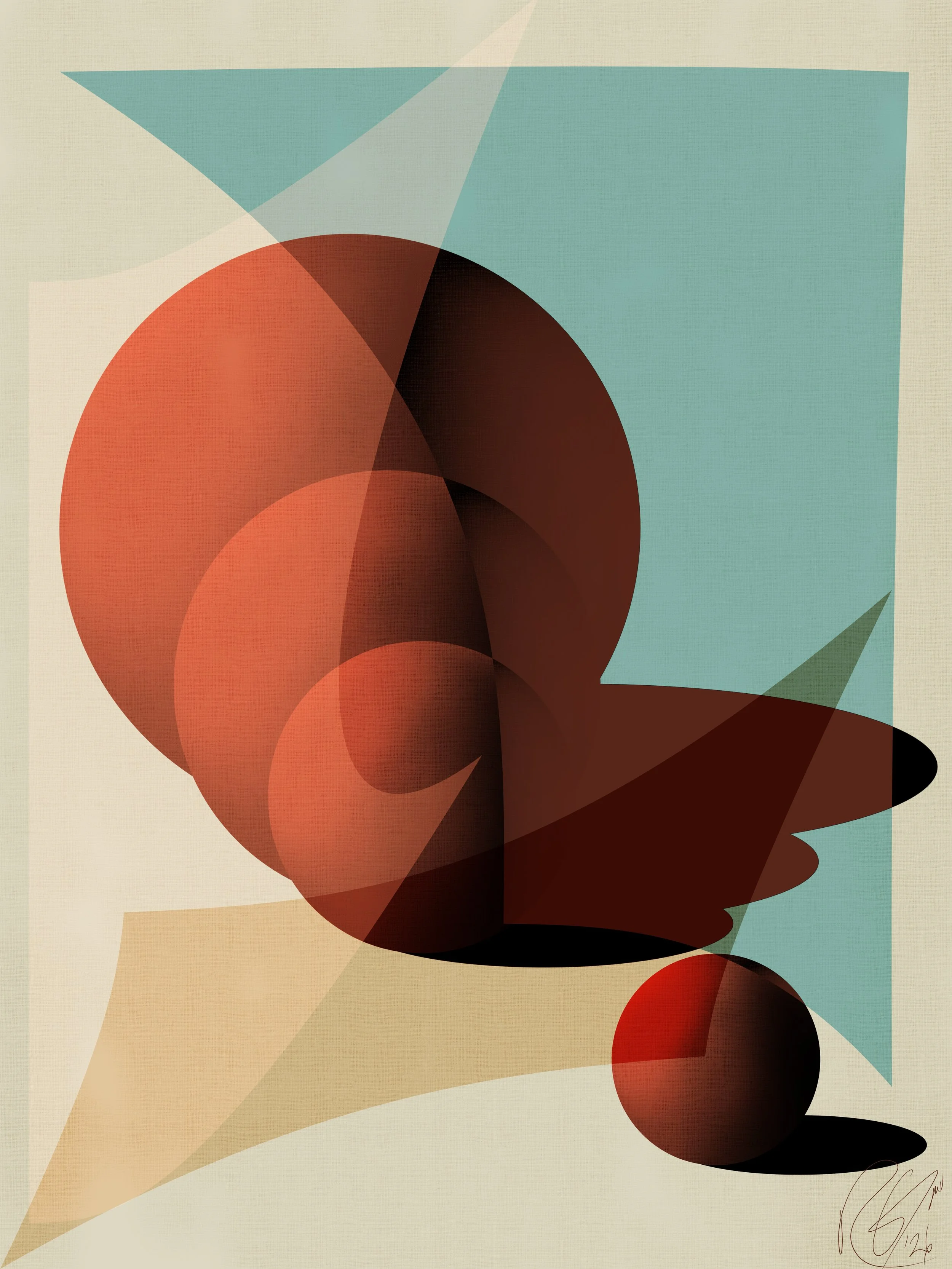
Brutalist's Horizon Collection
16” × 20” (print)
Ronald Gamble, digital on canvas, (2026)
Brutalism artwork visualizing the path of light around a spherical black hole. Each of the works visualize the mathematically accurate geodesic trajectories that light takes around a black hole, with each color and shape represents each path light takes All four works comprise of the Brutalist's Horizon Collection.
Works are titled (from left to right): Ray Tracing 1, Ray Tracing 2, Ray Tracing 3, & Black Hole Demographics
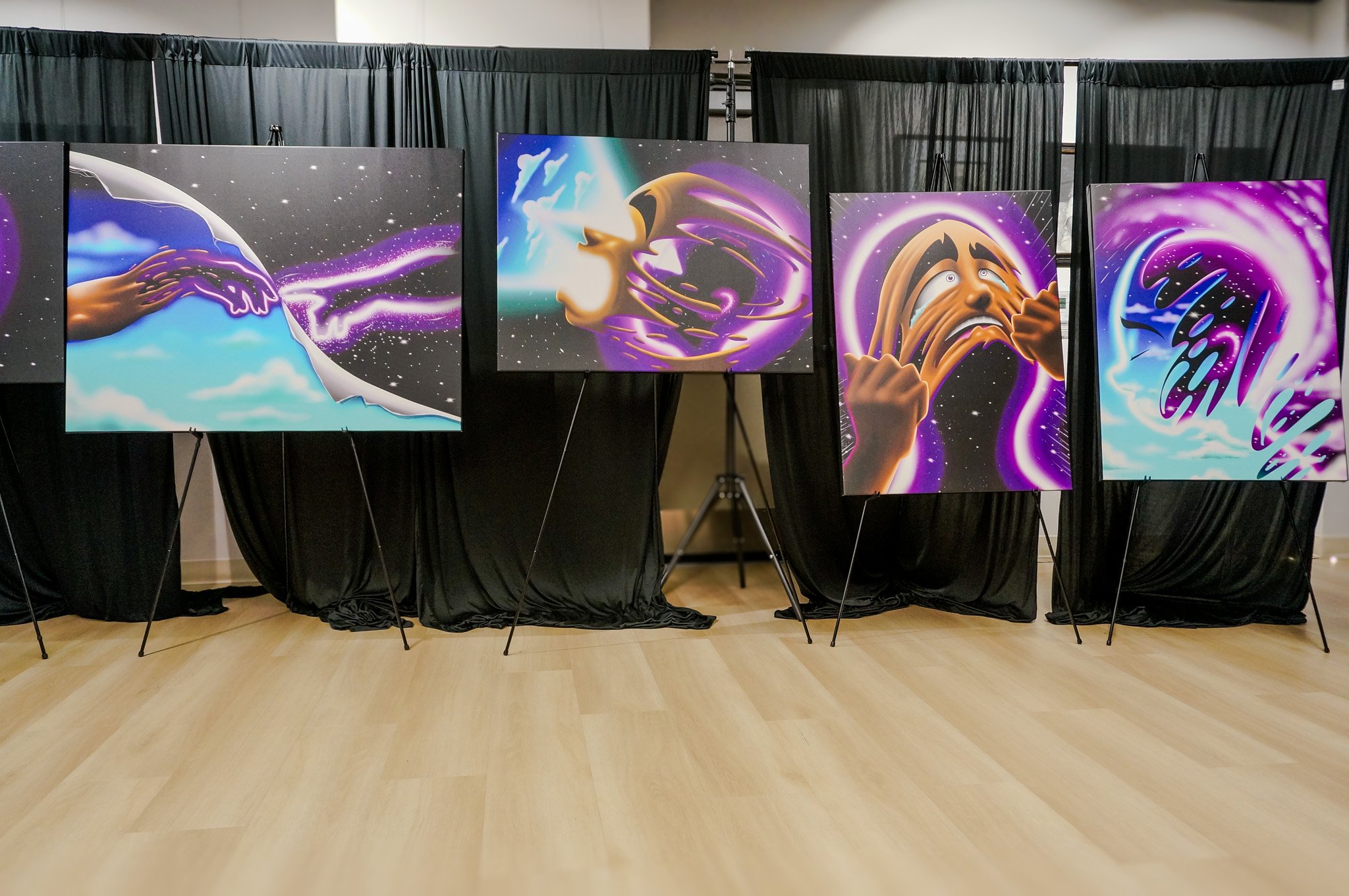
Each work considers a different intersection between the physical and the human. Spacetime becomes memory, where past and present coexist and light bends around what we cannot let go. Words appear as a cloud of possibility until the moment they are collapsed into a sentence on a page. Emotion moves like radiation through darkness, being felt before it is seen. And companionship becomes a kind of gravity: the pull of one presence bending the path of another, proof that no observer stands truly alone.
This collection of works draws from Modern and Contemporary artistic elements—abstraction, minimalism, conceptual geometry—to explore how human perception, like spacetime, bends and reshapes the trajectories of all who move through it.
The works investigate Einstein’s vision of relativity not merely as a physical theory, but as an emotional metaphor: the way time dilates between two people in conversation, the way proximity distorts perspective, the way mass—of memory, of experience—warps the space around a life. Each piece becomes a kind of spacetime diagram rendered in human terms, tracing the invisible forces that bind bodies, stories, and moments together.
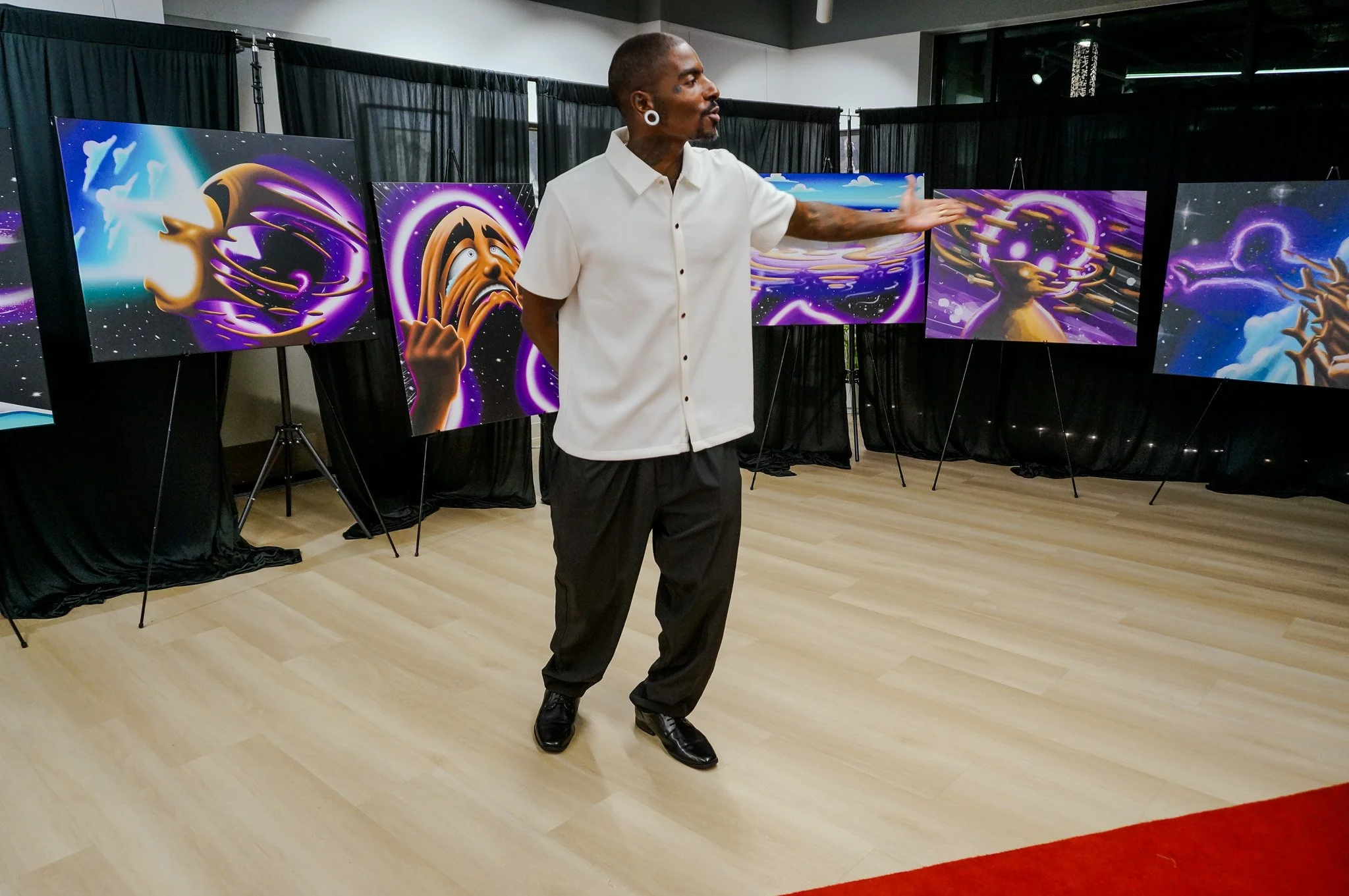
Relativity of Being.
Expand the imagination beyond physical perception.
At its heart, "The Relativity of Being" reminds us of what relativity has always known: no two people share a single vantage point, and every reality is, in some sense, personal—yet somehow, we find each other anyway.
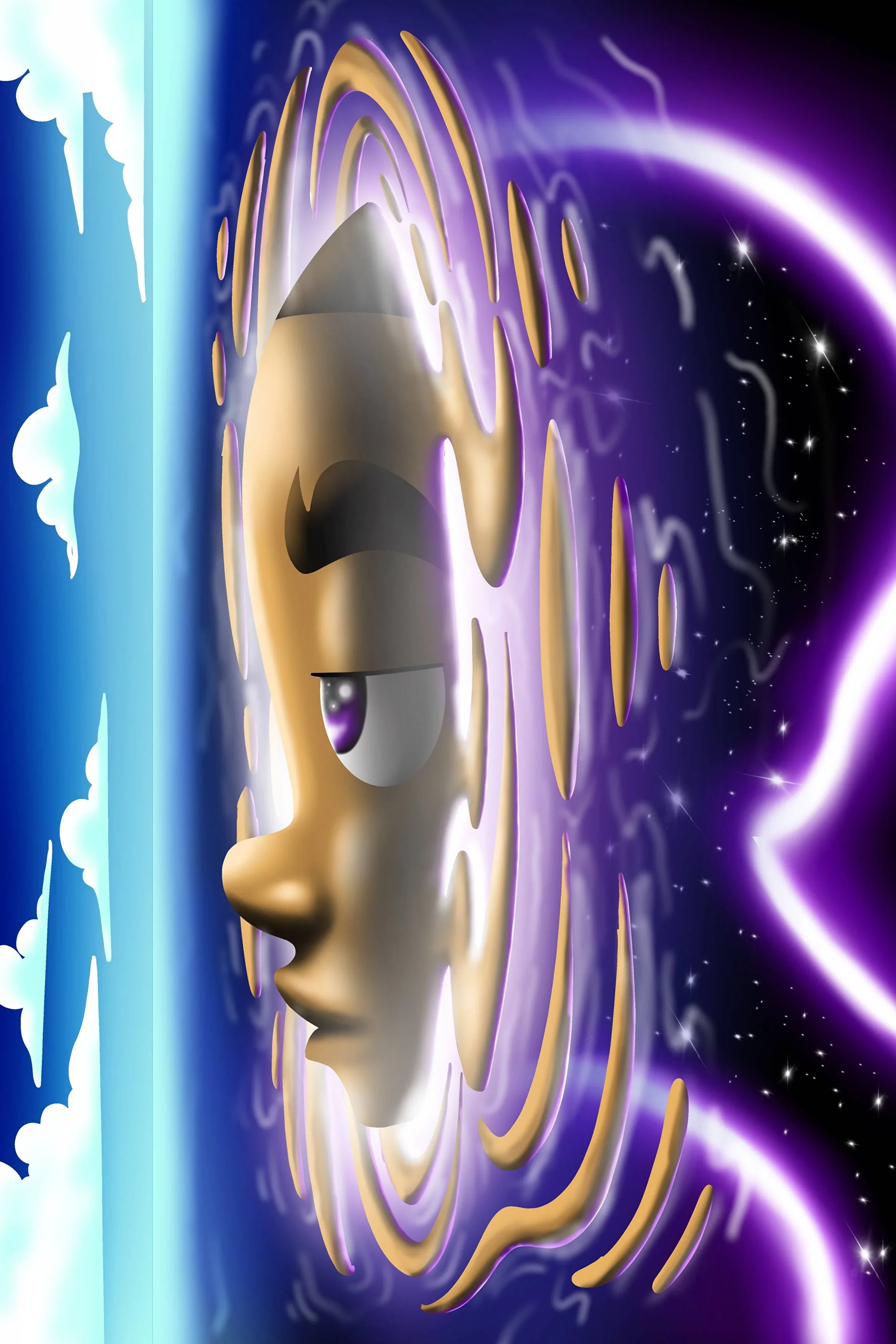
Perspective: Crossing The Threshold
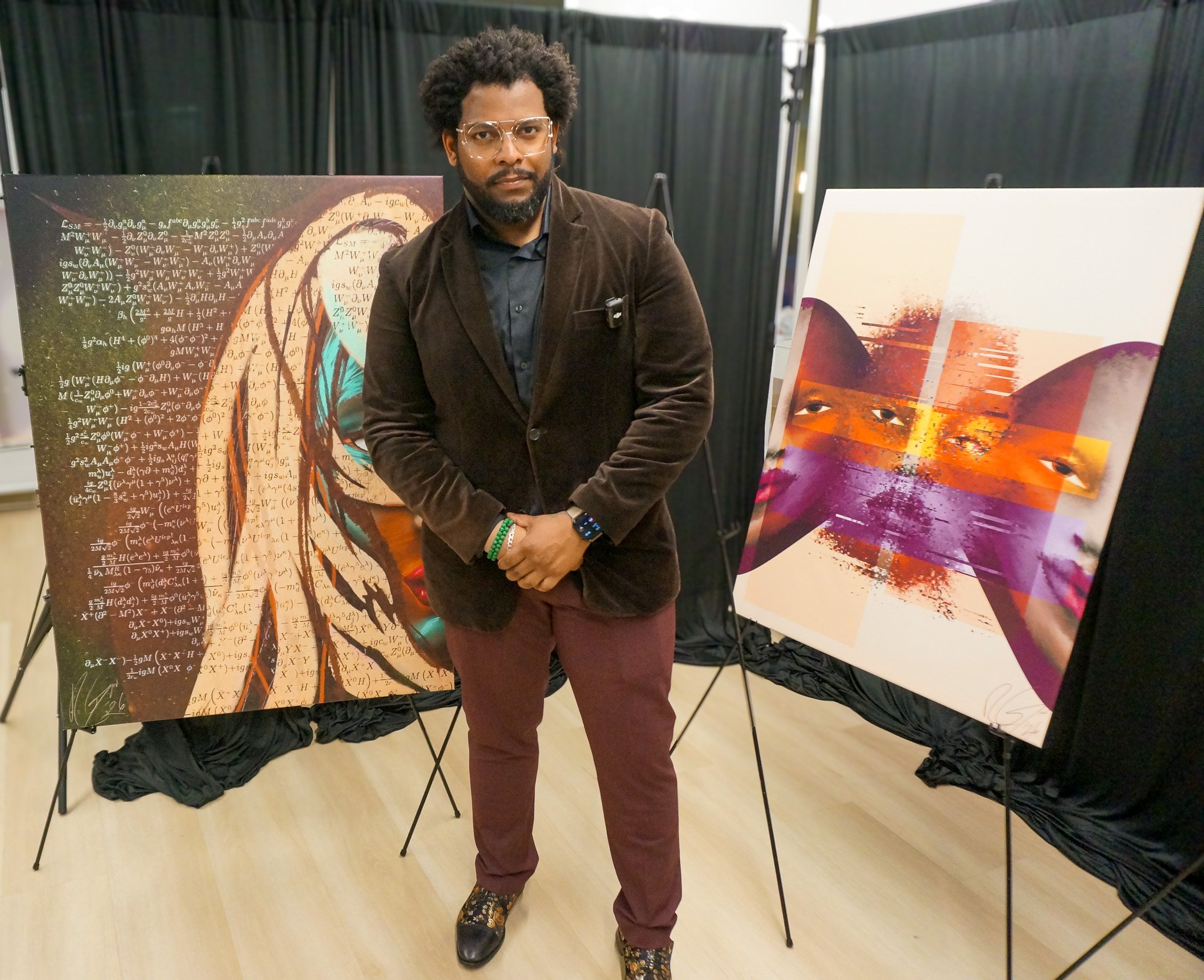
Sketch Gamble (2026), Acrylic on Canvas
The experience of viewing reality from a different perspective and letting go of the parts of yourself that no longer serve your greater purpose. Crossing the threshold of perspective, the soul experiences the physical body in a new light as the body begins to truly embody the soul, passing through and emerging from the waters of reality and shedding layers of its ego and sense of control. While the soul's perspective moves forward, the physical body's perspective looks up toward the sky. "Sometimes I cross over just to look at the clouds" is a quote that, to me, embodies the soul's willingness to endure the perspective of the physical body as it learns to appreciate life and reality as only a small piece of what's real.
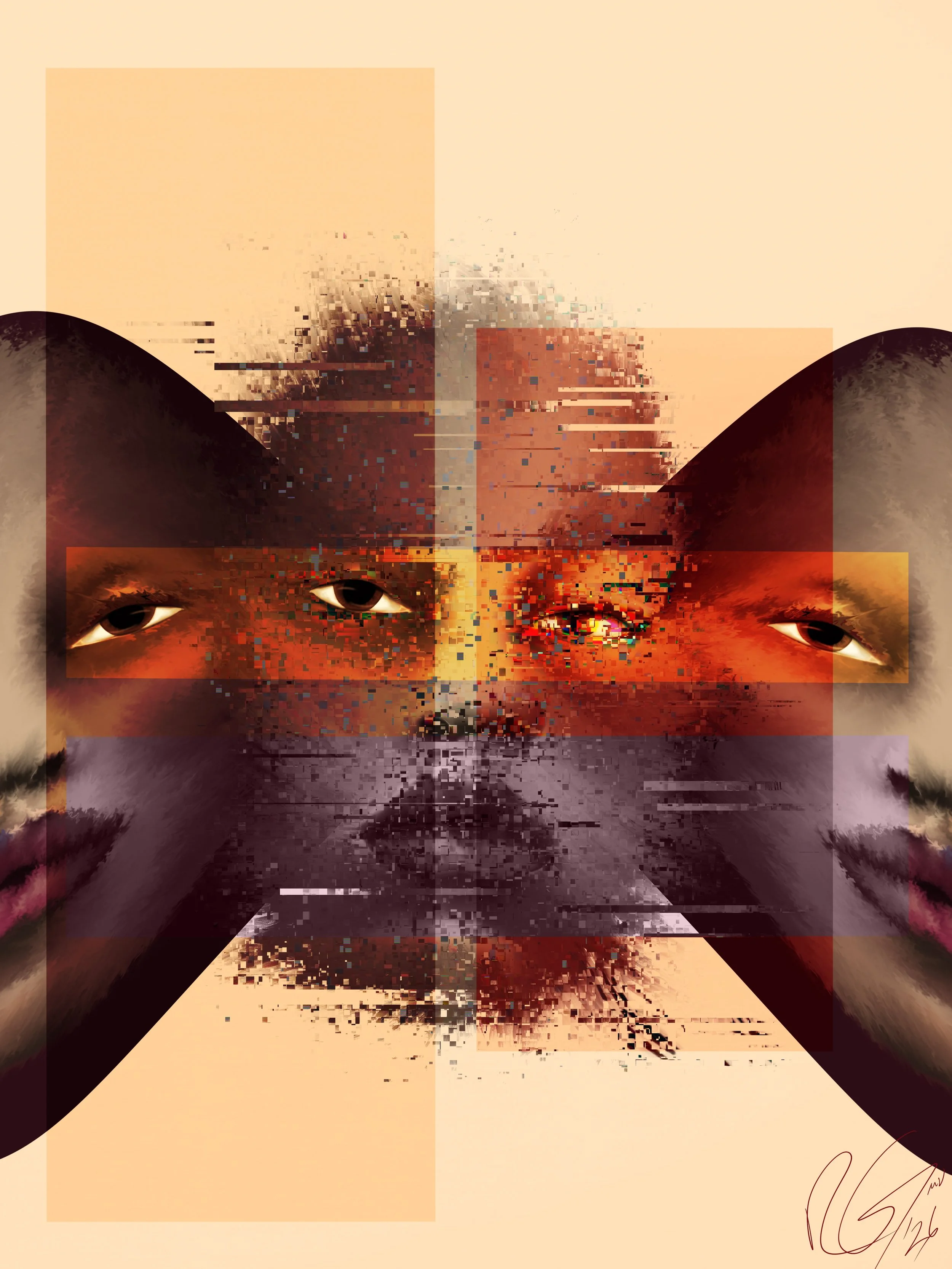
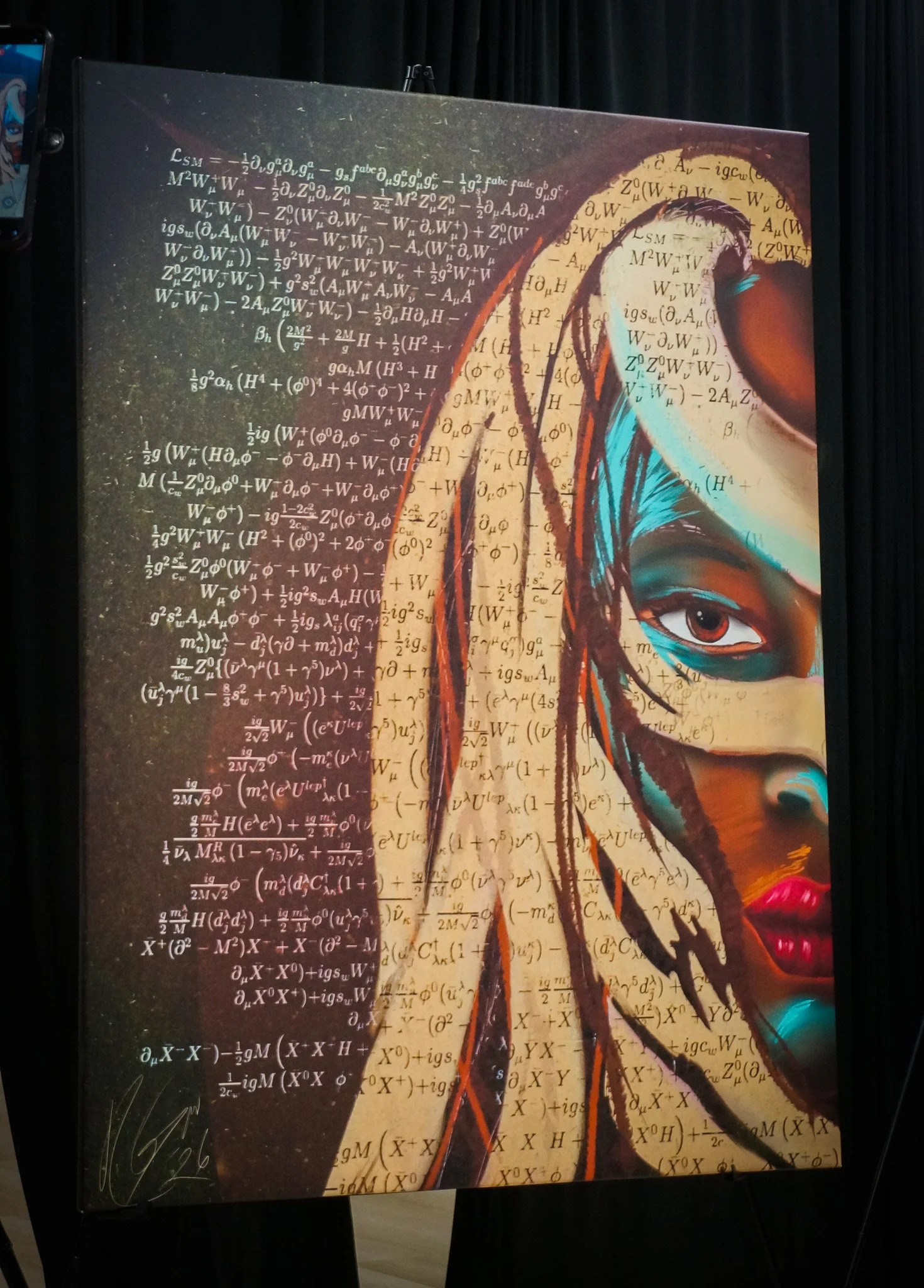
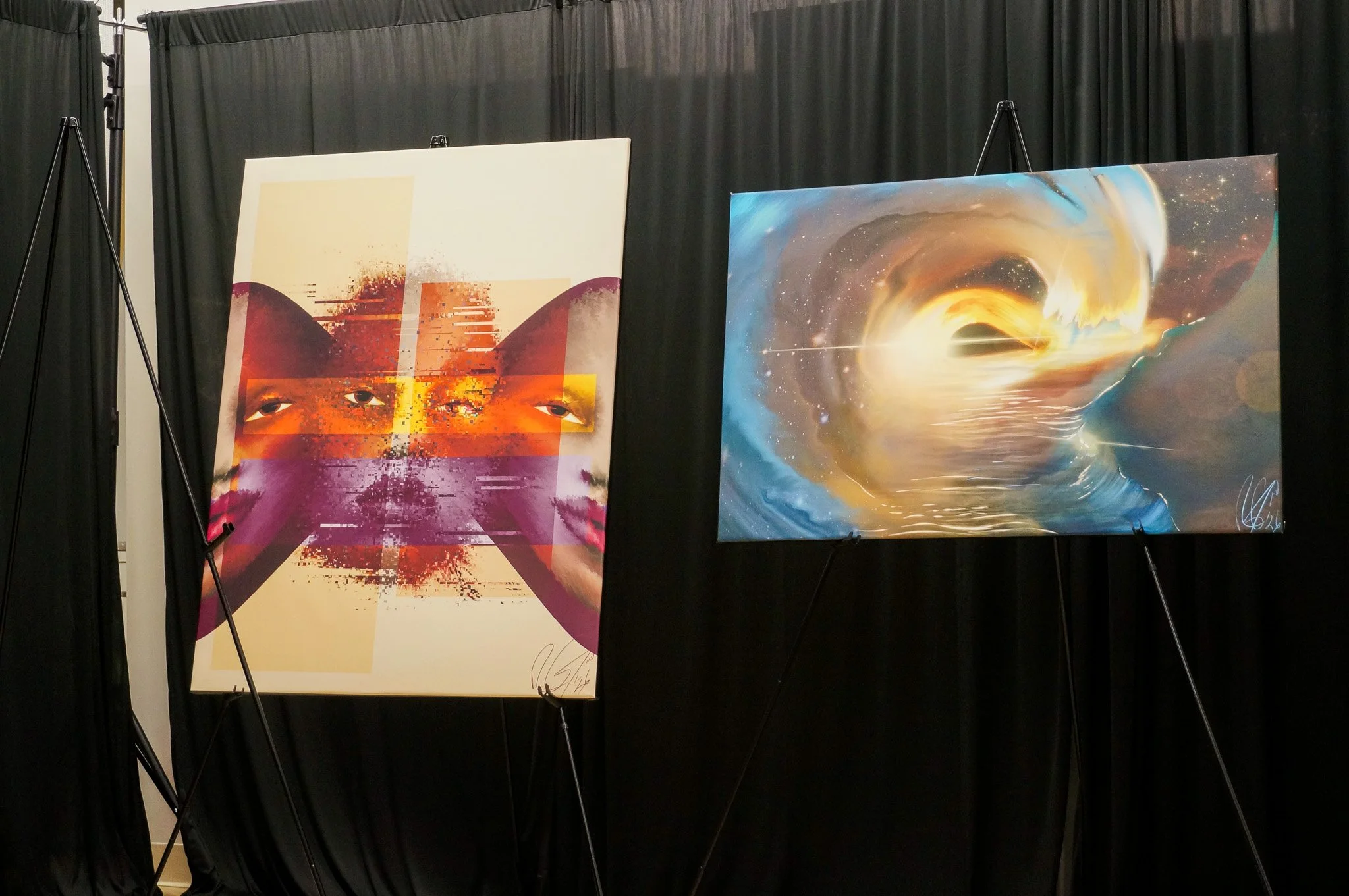
Holographic Principle
Holographic Principle, Ronald Gamble (2026)
Quantized Warhol Collection
40” x 30” print. digital on canvas.
The holographic principle states that the total information inside a volume of space can be encoded on its lower-dimensional boundary, meaning our three-dimensional reality could be a projection of a two-dimensional surface. Universe itself encodes information, as described by entropy, onto the surfaces of lower dimensional horizons. This work is a visual representation and interpretation of the Holographic Principle from theoretical physics and the black hole information paradox. Information is said to be quantized at the surfaces of event horizons of black holes.
The physical body housing the emotional body, and the spiritual body housing the mental body. When all four work in unison, they create a universe — "uni" representing one, and "verse" representing a song or frequency. All parts work together toward a greater understanding that could not be achieved if any one of these bodies were missing or misaligned. From my own perspective, this is the true gift of life and the mercy of free will granted to us by the Creator: the ability to create and appreciate life as the Creator does, with the acknowledgment that good and evil are ultimately a matter of intent and perspective.